How to plan for and recover from major disruptions, from ransomware to natural disasters, using RTO, RPO and tested recovery procedures.
Business Continuity and Disaster Recovery
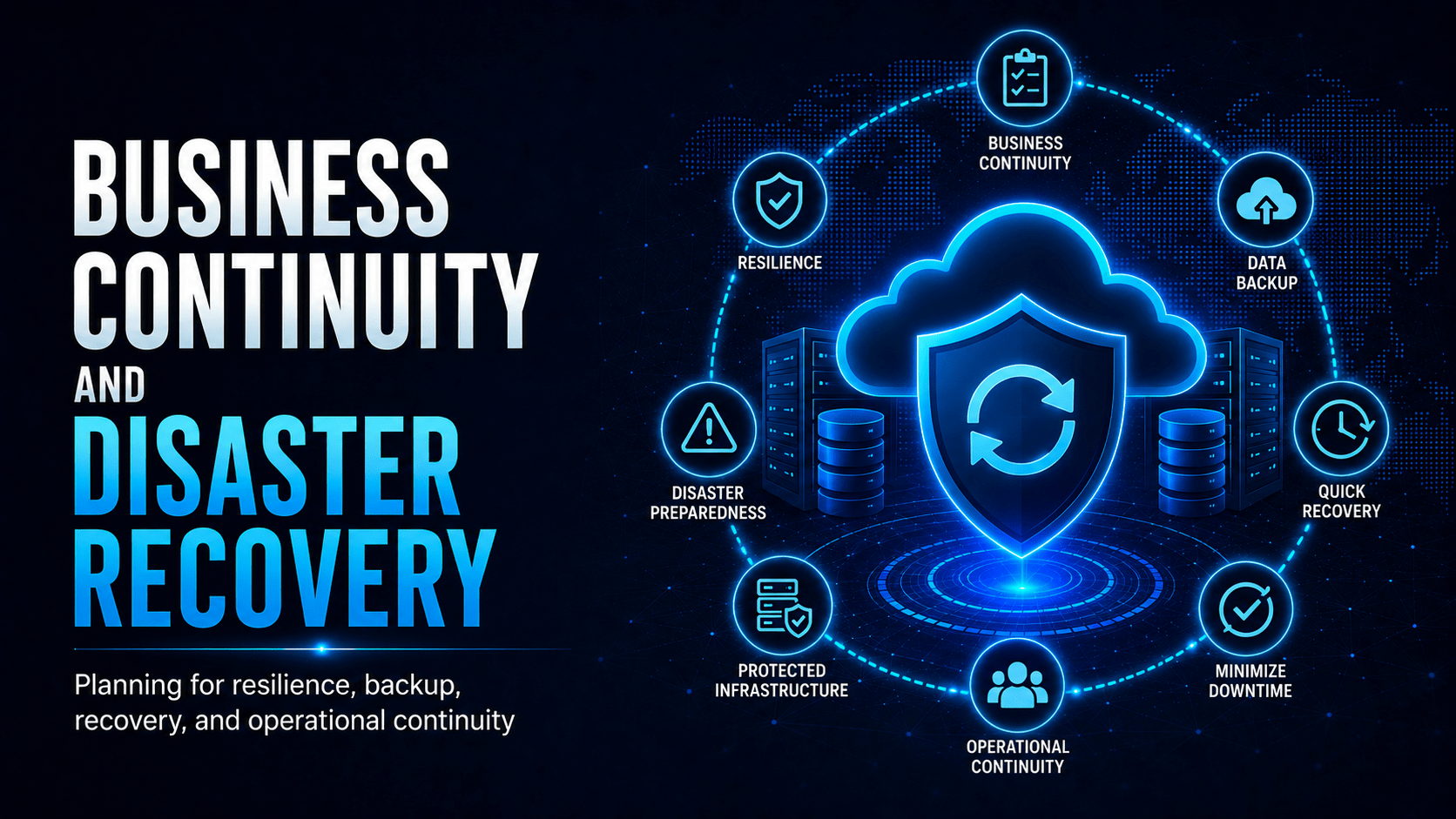
Business Continuity (BC) is about keeping the organisation running during a disruption. Disaster Recovery (DR) is about restoring systems after a failure. Together they define how your organisation survives major incidents.
RTO and RPO: The Key Metrics
System
Example RPO
Example RTO
Backup Frequency Needed
Customer database
1 hour
2 hours
Continuous / hourly
Email system
4 hours
4 hours
Every 4 hours
Internal wiki
24 hours
8 hours
Daily
Archive storage
1 week
48 hours
Weekly
⛔ Important
An RTO of “we’ll figure it out when it happens” is not a strategy. Organisations that skip DR testing find out during a real incident that the backups are corrupted, the restore procedure fails, or the documentation is years out of date. Test the RTO on a schedule, or you do not know whether you can hit it.
Backup Strategy: The 3-2-1 Rule
⚠ Warning
Backups connected to the network are not safe from ransomware. Modern ransomware hunts for backup systems before it triggers encryption. At least one copy of your backups must be air-gapped (physically disconnected) or immutable (cloud storage with object lock that prevents deletion or modification for a set period).
Types of DR Testing
Testing your BC/DR plan is the only way to know it works:
Test Type
Description
Frequency
Tabletop Exercise
Team walks through a scenario verbally, no systems involved
Quarterly
Walkthrough Test
Review procedures step by step with documentation
Bi-annually
Simulation
Partial restoration in a test environment
Annually
Full Failover Test
Fail over to the DR environment and restore production for real
Annually (high cost, high confidence)
✓ Key Point
Test your backups, don’t just create them. Schedule restore tests for your critical systems. Plenty of organisations find out their backup tapes are blank, or the restore procedure is three years out of date, at the moment they need it most.
Mobile Techs IT Consulting
If everything went down tomorrow, how fast could you recover?
Until you’ve restored from a backup, you don’t know how long it takes or whether it works. Mobile Techs IT Service builds recovery you can rely on for Gold Coast businesses: 3-2-1 backup with ransomware-proof offsite copies, regular tested restores, realistic RTO/RPO targets, and a documented disaster recovery plan your team can follow. Home users welcome too, on-site or remote, anywhere in Australia.